
An income statement will also be produced and explains the changes in retained earnings during the period. Net income increases retained earnings balance; dividends decrease it. To produce the balance sheet at the end of the period, all transactions are processed for each line item. For a start-up business, the beginning amounts for all accounts are zero.
Buy Fixed Assets on Credit
That is, each entry made on the Debit side has a corresponding entry on the Credit side. It’s a tool used by company leaders, investors, and analysts that better helps them understand the business’s financial health in terms of its assets versus liabilities and equity. The accounting equation relies on a double-entry accounting system. In this system, every transaction affects at least two accounts. For example, if a company buys a $1,000 piece of equipment on credit, that $1,000 is an increase in liabilities (the company must pay it back) but also an increase in assets.
What is your current financial priority?
Still, you’ll likely see this equation pop up time and time again. During the month of February, Metro Corporation earned a total of $50,000 in revenue from clients who paid cash. Using Apple’s 2023 earnings report, we can find all the information we need for the accounting equation. This transaction brings cash into the business and also creates a new liability called bank loan. This transaction also generates a profit of $1,000 for Sam Enterprises, which would increase the owner’s equity element of the equation. At this time, there is external equity or liability in Sam Enterprise.
- Although the balance sheet always balances out, the accounting equation can’t tell investors how well a company is performing.
- The accounting equation is important because it allows the business or entity to correctly record transactions and, therefore, maintain their financial statements.
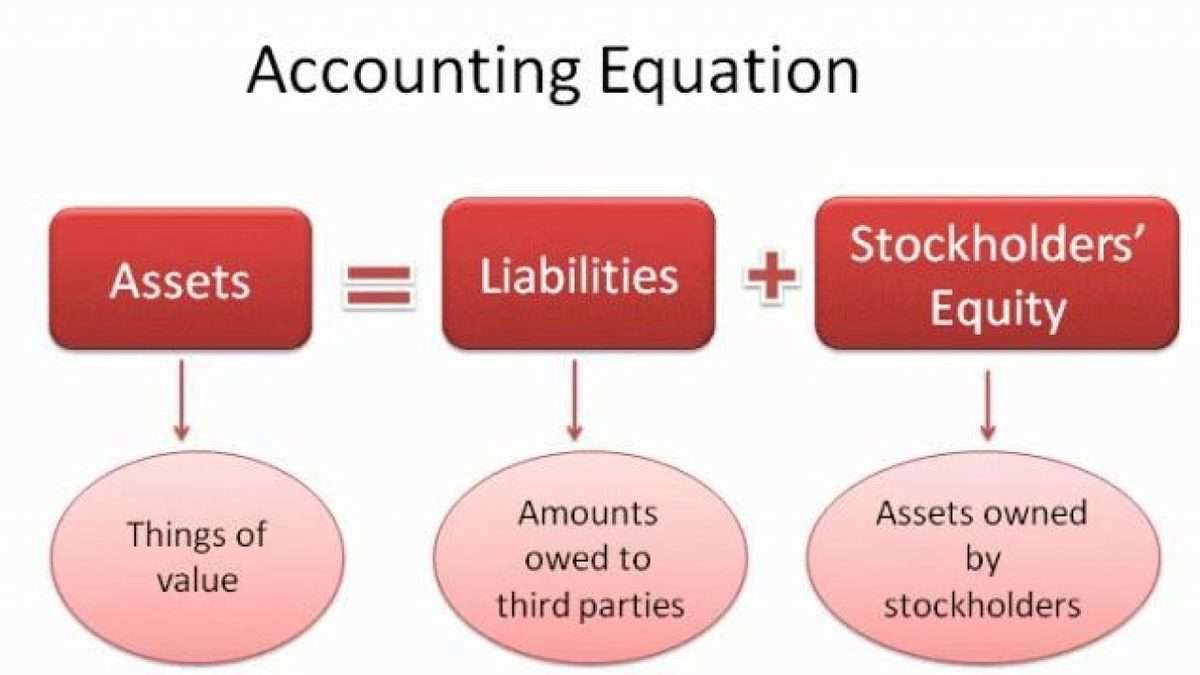
- The accounting equation’s left side represents everything a business has (assets), and the right side shows what a business owes to creditors and owners (liabilities and equity).
- Net income increases retained earnings balance; dividends decrease it.
Understanding the Equation
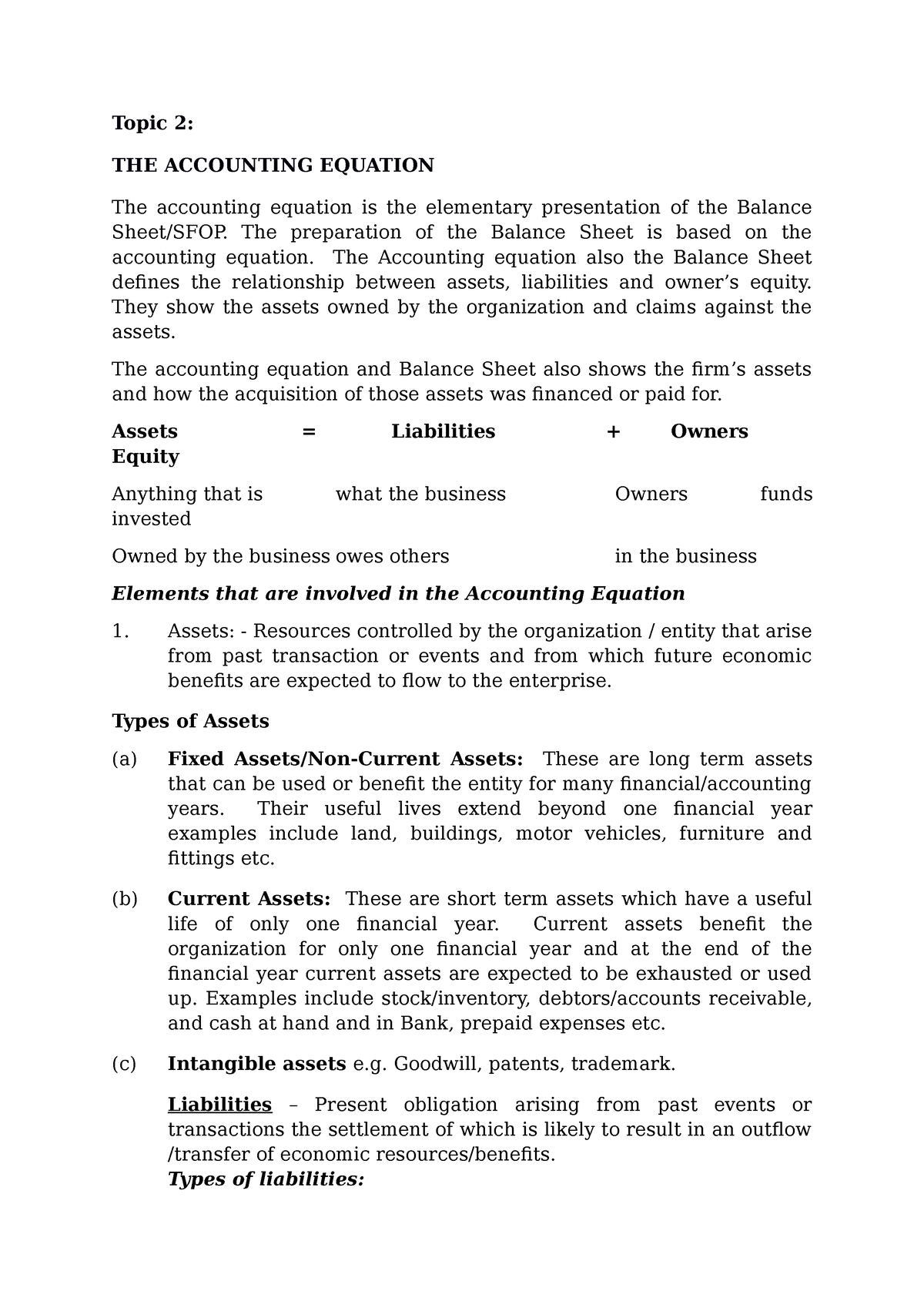
So whatever the worth of assets and liabilities of a business are, the owners’ equity will always be the remaining amount (total assets MINUS total liabilities) that keeps the accounting equation in balance. With the accounting equation expanded, financial analysts and accountants can better understand how a company structures its equity. Additionally, analysts can see how revenue and expenses change over time, and the effect of those changes on a business’s assets and liabilities. The accounting equation states that total assets is equal to total liabilities plus capital. This lesson presented the basic accounting equation and how it stays equal. The accounting equation asserts that the value of all assets in a business is always equal to the sum of its liabilities and the owner’s equity.
This then allows them to predict future profit trends and adjust business practices accordingly. Thus, the accounting equation is an essential step in determining company profitability. A company’s quarterly and annual reports are basically derived directly from the accounting equations used in bookkeeping practices. These equations, entered in a business’s general ledger, will provide the material that eventually makes up the foundation of a business’s financial statements. This includes expense reports, cash flow and salary and company investments. The accounting equation can be best described as the primitive foundation of the double-entry system of accounting.
A financial professional will offer guidance based on the information provided and offer a no-obligation call to better understand your situation. For information pertaining to the registration status of 11 Financial, please contact the state securities regulators for those states in which 11 Financial maintains a registration filing. On 22 January, Sam Enterprises pays $9,500 cash to creditors and receives a cash discount of $500.
This long-form equation is called the expanded accounting equation. On the other hand, equity refers to shareholder’s or owner’s equity, which is how much the shareholder or owner has staked into the company. Small business owners typically have a 100% stake in their company, while growing businesses may have an investor and share 20%.
A business may take out a bank loan of 5m, cash will increase by 5m and liabilities will also increase by 5m. The concept of the expanded accounting equation does not extend to the asset and liability sides of the accounting equation, since those elements are not directly altered by changes in the income statement. Thus, there is no need to show additional detail for the asset or liability the accounting equation is defined as: sides of the accounting equation. This increases the inventory (Asset) account and increases the accounts payable (Liability) account. The accounting equation’s left side represents everything a business has (assets), and the right side shows what a business owes to creditors and owners (liabilities and equity). This equation holds true for all business activities and transactions.